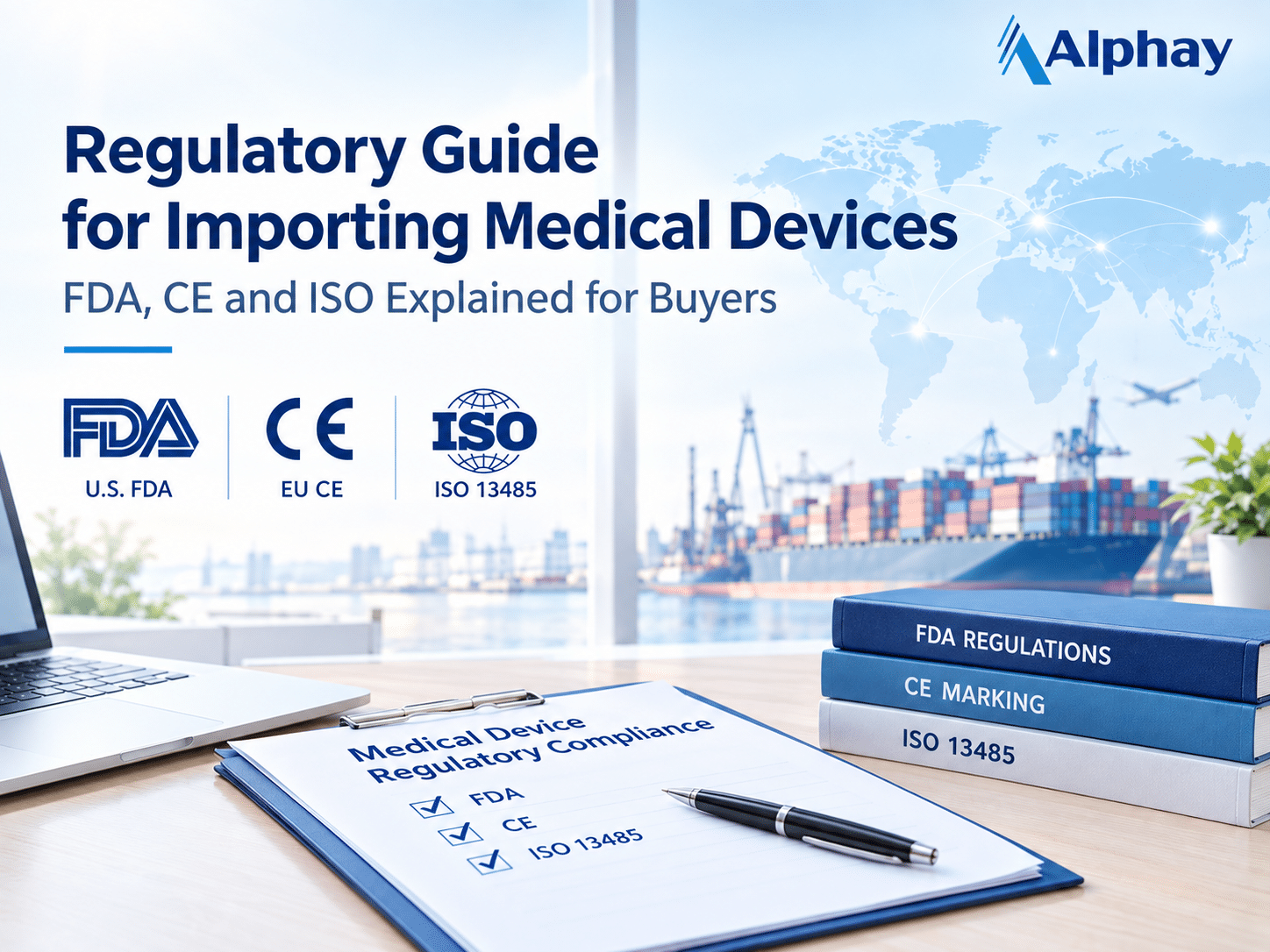
Regulatory Guide for Importing Medical Devices: FDA, CE, and ISO Explained for Buyers
For distributors, importers, wholesalers, and private-label brands, regulatory compliance is one of the first things to check before placing a medical device order.
A supplier may tell you that a product is “FDA certified,” “CE certified,” or “ISO certified,” but these terms do not all mean the same thing. More importantly, having a certificate or registration does not automatically mean a product can be marketed in every country.
For B2B buyers, the real question is: What documentation does this specific product need for my target market, and can my supplier provide it?
This guide breaks down FDA, CE, and ISO requirements and explains what buyers should check when sourcing products such as neck traction devices, lumbar traction devices, knee massagers, and other home physiotherapy equipment.
1. FDA, CE, and ISO: What Is the Difference?
The three terms are often mentioned together, but they serve different purposes.
FDA: U.S. Market Requirements
The U.S. Food and Drug Administration (FDA) regulates medical devices marketed in the United States. Depending on the device and its classification, manufacturers may need establishment registration, device listing, and, where applicable, a premarket submission such as 510(k), De Novo, or PMA.
Importantly, FDA establishment registration or device listing should not be described as FDA approval. The FDA itself states that registration and listing do not mean that the agency has approved an establishment or its products.
For buyers importing from overseas, it is therefore important to ask your supplier for the specific FDA status and documentation for the exact product, rather than simply accepting an “FDA certified” claim.
If you are sourcing from a neck traction device manufacturer or physiotherapy equipment supplier for the U.S. market, this distinction can save you significant time during compliance review.
CE Marking: Access to the EU Market
CE marking is related to European market compliance. For medical devices, Regulation (EU) 2017/745 (MDR) establishes requirements covering manufacturers, authorized representatives, importers, and distributors.
For an importer, checking the CE mark alone is not enough. Under the MDR, importers need to verify, among other things, that the device has been CE marked, that an EU Declaration of Conformity has been drawn up, and that the manufacturer and labeling requirements are properly addressed.
This means a B2B buyer should look beyond a CE logo and request the supporting documentation.
For products such as a cervical traction device, lumbar traction device, or other rehabilitation equipment, confirm that the exact model and intended use are covered by the applicable conformity assessment.
ISO 13485: A Quality Management Standard
ISO 13485 is different from FDA registration and CE marking.
It is an international quality management system standard specifically designed for the medical device industry. It focuses on how an organization manages quality and regulatory requirements throughout the product life cycle.
For procurement teams, an ISO 13485 certified manufacturer can provide an important indication that the supplier operates within a structured medical-device quality management system.
However, ISO 13485 certification by itself does not mean that every product manufactured by the company is automatically FDA-cleared or CE-marked.
Think of it this way:
| Requirement | What it mainly tells a buyer |
|---|---|
| FDA | U.S. regulatory requirements for applicable medical devices |
| CE / EU MDR | Conformity with applicable EU requirements |
| ISO 13485 | Quality management system for medical devices |
The three can work together, but they are not interchangeable.
2. What Should B2B Buyers Check Before Placing an Order?
Regulatory documentation should be part of your supplier evaluation—not something you start asking about after the goods are ready to ship.
Here are the key items to check.
1. Product Classification
Start with the product itself.
A neck massager, neck traction device, lumbar support product, and professional physiotherapy device may have different regulatory requirements depending on their intended use, claims, technical characteristics, and destination market.
Ask your supplier:
- What is the product’s intended use?
- How is the product classified in the target market?
- What regulatory pathway applies?
- Which model numbers are covered?
- What claims are supported by the documentation?
This is particularly important when working with a medical device manufacturer for private-label products.
2. Product-Specific Certificates and Documents
Do not only ask, “Do you have CE and FDA?”
Ask for the documentation related to the exact SKU you plan to import.
Depending on the market and product, your compliance file may include:
- Declaration of Conformity
- Applicable certificates
- Test reports
- Product labeling
- Instructions for use
- Technical documentation or relevant supporting documents
- Registration/listing information where applicable
- Quality management system certificates
A professional rehabilitation equipment manufacturer should be able to explain which documents apply to each product rather than sending the same generic certificate for every SKU.
3. What About Private Label Products?
Private labeling adds another layer that buyers need to consider.
If you purchase a product from a factory and sell it under your own brand, do not assume that the factory’s existing certificates automatically cover your new branded product.
Your responsibilities can depend on:
- The target country
- Product classification
- Whether the design is unchanged
- Whether the intended use or claims change
- Whether the labeling changes
- Who is identified as the legal manufacturer
- Whether you are acting as an importer, distributor, or manufacturer under local regulations
For example, EU MDR Article 16 includes circumstances where an importer or distributor can take on manufacturer obligations, including placing a device on the market under its own name or trademark in certain situations.
That’s why buyers considering a private-label physiotherapy equipment supplier should discuss regulatory responsibilities with the factory before changing the product label or packaging.
4. FDA Checklist for U.S. Buyers
If you plan to import rehabilitation or home physiotherapy products into the United States, ask your supplier these questions:
Product
- What is the FDA product classification?
- Does the product require premarket notification or another form of marketing authorization?
- What is the applicable product code?
- Is the exact model registered/listed where required?
Manufacturer
- Is the manufacturing establishment registered with FDA where required?
- Is the foreign manufacturer associated with the appropriate U.S. agent?
- Who is responsible for the U.S. regulatory communication?
Foreign establishments manufacturing devices imported into the U.S. are required to identify a U.S. agent as part of the FDA registration process.
Documentation
- Can the supplier provide the relevant FDA registration/listing information?
- Are the product labels and claims appropriate for the U.S. market?
- Does the documentation correspond to the exact model being purchased?
FDA requirements vary by device, so buyers should confirm the current requirements for their specific product rather than relying on a generic “FDA approved” statement.
5. CE / EU MDR Checklist for European Buyers
For buyers selling into the EU, the supplier conversation should include:
- CE marking
- EU Declaration of Conformity
- Applicable conformity assessment documentation
- Manufacturer information
- EU Authorized Representative information where required
- Importer information
- Product labeling
- Instructions for use
- UDI requirements where applicable
- EUDAMED-related requirements where applicable
EU importers have their own compliance responsibilities. They are expected to verify that the device is compliant, appropriately CE marked, accompanied by the required documentation, and that the relevant manufacturer and authorized representative requirements have been addressed.
The European Commission also notes that the MDR assigns specific responsibilities to manufacturers, authorized representatives, importers, and distributors throughout the supply chain.
So when choosing a cervical traction device supplier or lumbar traction device manufacturer, make sure the supplier understands the role they are taking in your EU supply chain.
6. Why ISO 13485 Matters When Choosing a Factory
Regulatory documents are important, but buyers should also look at the manufacturing system behind the product.
ISO 13485 focuses specifically on quality management for medical devices.
For procurement teams, this can be relevant when evaluating:
- Quality control procedures
- Production consistency
- Documentation management
- Supplier management
- Corrective and preventive actions
- Traceability
- Product change control
In other words, you are not only buying a product—you are choosing the manufacturing system behind that product.
This is one reason why working with an established rehabilitation equipment factory or home physiotherapy equipment manufacturer can make ongoing procurement easier.
7. Questions to Ask Your Medical Device Supplier
Before approving a supplier, put these questions on your sourcing checklist:
Regulatory
- Which markets is this product currently sold in?
- What is the regulatory classification?
- Which certifications or registrations apply to this exact model?
- Can you provide the relevant documentation for review?
- Does the documentation cover private-label versions?
Manufacturing
- Is your factory ISO 13485 certified?
- What quality inspections are performed before shipment?
- Can you provide pre-production samples?
- What is your monthly production capacity?
- How do you manage product changes?
Private Label
- Can you customize the logo and packaging?
- Can product colors or configurations be customized?
- Will regulatory documents need to be updated after customization?
- Who will be identified as the manufacturer on the product and packaging?
These questions can help you separate a genuine medical device manufacturer from a trading company that simply resells products.
8. How Alphay Medical Supports B2B Buyers
For buyers sourcing rehabilitation and home physiotherapy products, Alphay Medical provides a range of products including cervical care devices, neck traction devices, lumbar traction devices, knee care products, massagers, and other home physiotherapy equipment.
Alphay’s website states that its factory has ISO 9001 and ISO 13485 certifications, while its products are offered with market-specific certifications and documentation including FDA and CE-related compliance information.
For B2B buyers, the important point is not simply having a list of certificates. The better approach is to match the specific product, model, intended use, target market, and required documentation before placing an order.
Alphay also supports OEM/ODM and private-label cooperation, making it possible for distributors, wholesalers, retailers, and healthcare brands to develop branded rehabilitation product lines.
9. Final Buyer Checklist
Before signing off on a new medical device supplier, make sure you can answer these questions:
✓ What market am I selling into?
✓ What is the product’s regulatory classification?
✓ What documentation does this exact model require?
✓ Does the supplier have the relevant product-specific documentation?
✓ Is the factory operating under an appropriate quality management system?
✓ Will my private-label changes affect regulatory responsibilities?
✓ Who is responsible for registration, labeling, and post-market obligations?
✓ Have I reviewed the documents before placing the bulk order?
A strong supplier should be able to answer these questions clearly and provide documentation that matches the products you are actually buying.
For distributors looking for a reliable neck traction device manufacturer, lumbar traction device supplier, knee massager manufacturer, or home physiotherapy equipment factory, regulatory support should be considered alongside product quality, MOQ, production capacity, customization, and long-term supply stability.
Looking for a Compliance-Ready Manufacturing Partner?
Alphay Medical works with distributors, wholesalers, retailers, and private-label healthcare brands looking for rehabilitation and home physiotherapy products.
Request a Factory Quote
Ask for Product Certifications & Compliance Documents
Get OEM/ODM Support for Your Private Label
Regulatory requirements vary by country, product classification, intended use, and market role. This article is for general B2B sourcing information and should not be treated as legal or regulatory advice. Buyers should confirm current requirements with the relevant regulatory authority or qualified regulatory professional before importing or marketing a product.